Written by Howard Hsu
I used to be bilingual, I swear. When I tell my friends this nowadays, they look at me with cocked, skeptical eyebrows, like I’m Uncle Rico insisting that I used to be able to throw a pigskin a quarter mile.
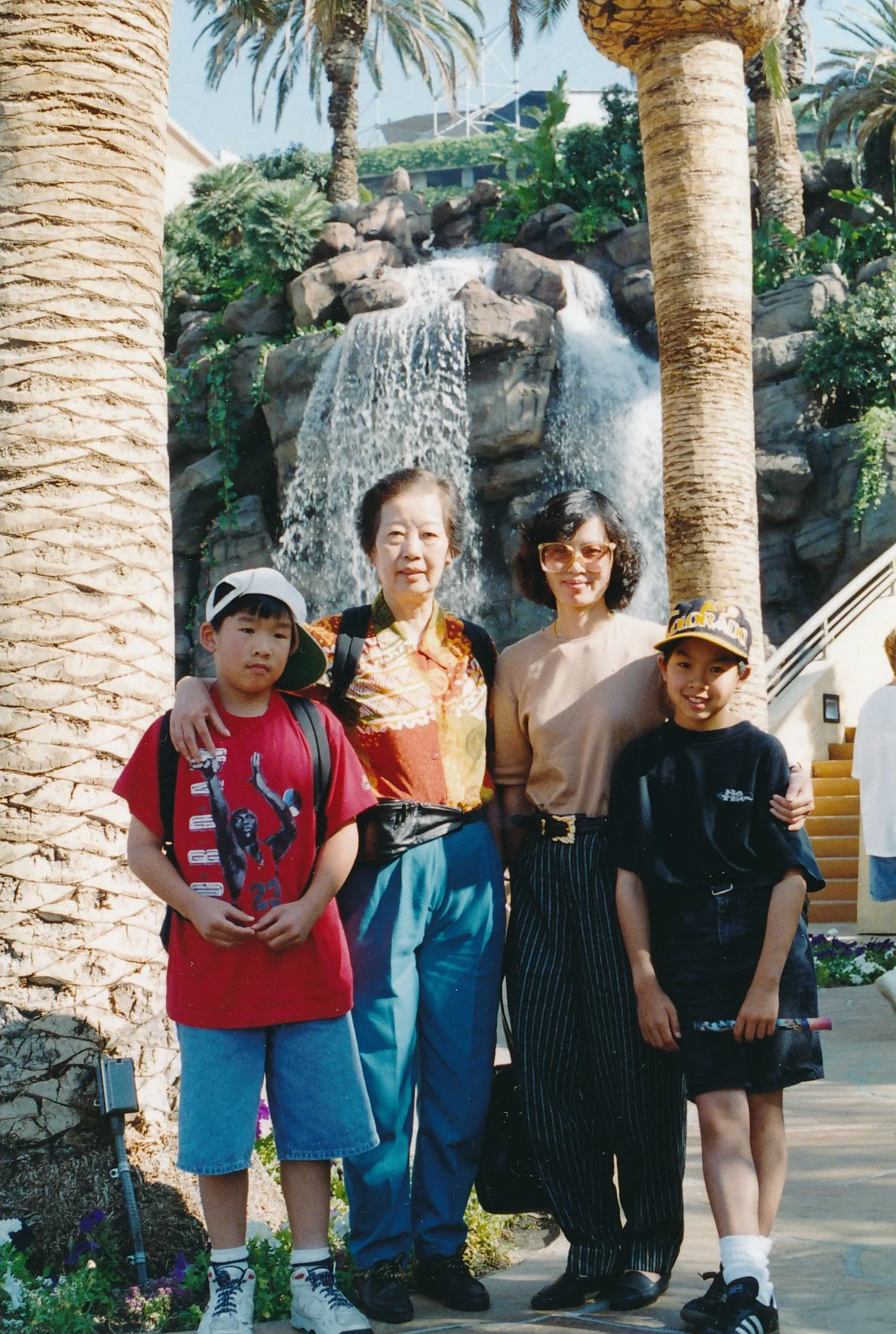
But it’s true! Like many children of immigrants, I had a grandfather (gong gong) and grandmother (por por) who played a central role in my upbringing. My parents spent much of their time tending to their growing restaurant dynasty in Denver (built on the back of a vinegary sesame chicken so aggressively pungent my eyes and mouth still water thinking about it to this day), and left my brother and me in our gong gong and por por’s stewardship most days.
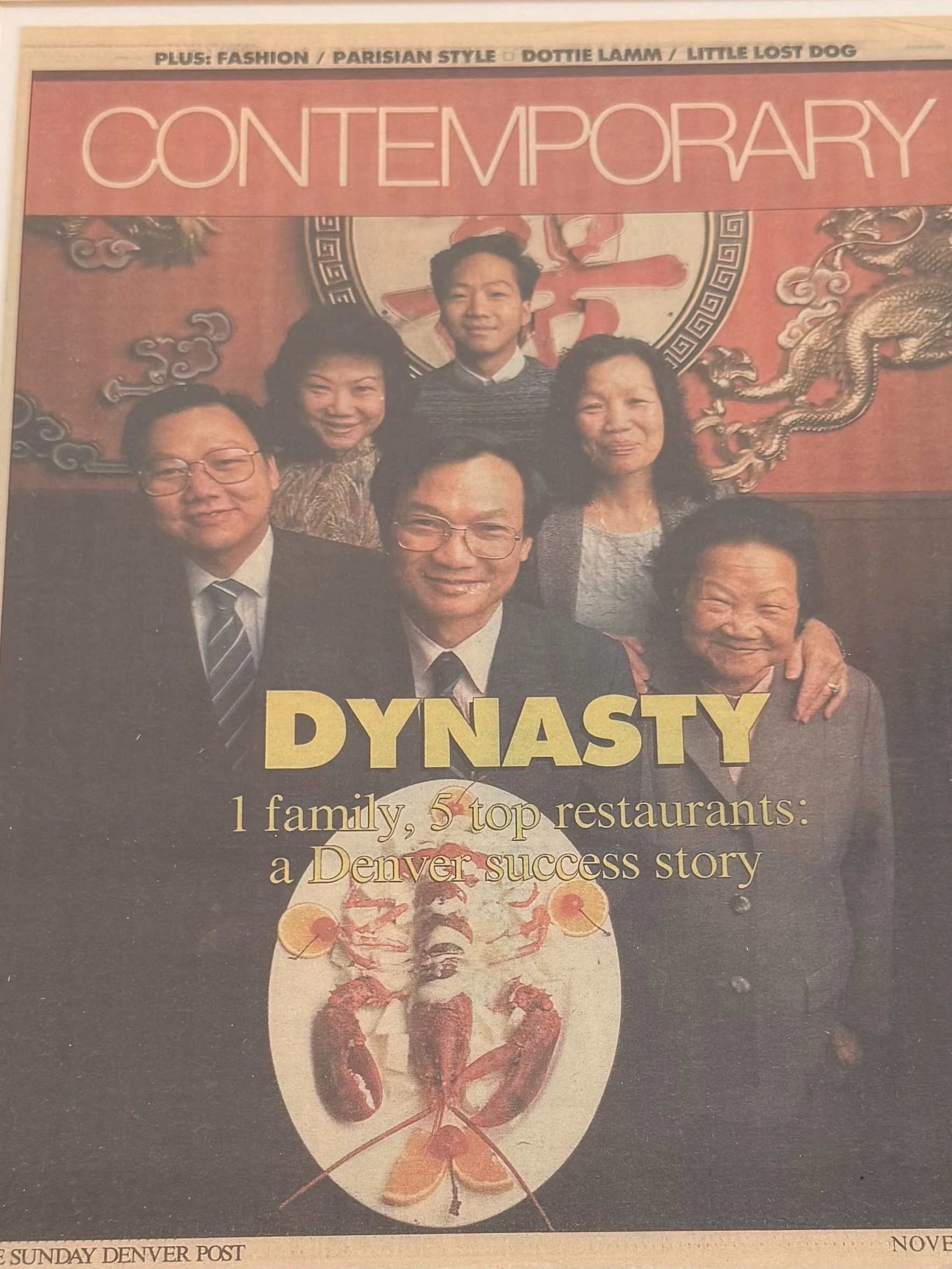
It was only natural for us to absorb their Cantonese (often cited as one of the most difficult languages in the world to learn). The language’s dramatic onomatopoeia and subtle tonality became our primary way of expressing ourselves to the world.
One of my dad’s favorite stories from my childhood is about a trip to Southglenn Mall with my extended family. Impressed by a “doll” at KB Toys, I pestered my parents to use that sweet, sweet restaurant money to buy that gorgeous doll for me.
When my por por, in her reserved wisdom, raised skepticism about its high price tag, I turned quickly (couldn’t she see that I was trying to close a deal?) and admonished her: “ngo mmm jun nay wha gwai!” (I forbid you from calling it expensive!)
This is a punchline my dad often delivers with a hearty laugh, and a lighthearted, carefree slap on my knee, right on the mauve-colored scar I’ve had since I was in middle school. Touching the scar always stings a little, and he never notices, too lost in his dramatic retelling. I’ll wince, a sharp mix of embarrassment and disembodiment, and do my best to laugh along.
It's baffling to me that the four-year-old mini-me was capable of such a flex of language. It feels like some brash but eloquent Cantonese apparition had taken over my body and recited these lines. I’m so sorry por por, it wasn’t me, it was the Canto Casper that had possessed me.
That was likely my peak as a bilingual. As I spent more time at daycare and school and less time with my grandparents, the power balance in my languages flipped, and English slowly took over. My parents, particularly my mom, still spoke to me in Cantonese, but they never forced me to learn it in any formal way. I absorbed my mom’s idioms (read: swear words that I didn’t realize were swear words) and never developed the muscle of actually expressing myself in the language.
While Canto used to be my primary form of expression, I now, without fail, glitch out whenever I’m forced to make a call as seemingly simple as dropping a do je (“thank you”) vs m goi (also “thank you,” but, like, different for reasons that always evade my grasp) when out to eat.
I am. I was the living embodiment of “sik tang, mmm sik gong” (I can understand, but I can’t speak).
Have you seen that Instagram clip where the college kid decides to weight train just one side of his body? He develops a David Robinson-like pumpkin shoulder on his left side while his right side remains feeble and underworked. Yeah, that’s my English vs. my Cantonese.
The Chinese community in Denver is still small enough that any meal out at one of the three authentic restaurants feels like a family reunion. Without fail, my dad will bump into an old friend or colleague, often sitting a table over. They’ll catch up in warm and boisterous Cantonese, shouting over the din of the room.
Also without fail, when there’s a break in the conversation, their attention will shift to me, which is my cue to step into the spotlight and sheepishly recite my one line of memorized dialogue: “sik tang, mmm sik gong,” a white flag in the conversation to say:
“I am incapable of contributing at the moment”
“but I’ll know if you talk shit about me.”
After which, I’ll recede back behind the curtains, never to be heard from again.
For decades, this was the way things went. I had adopted a posture of learned helplessness, convincing myself that being an NPC in these conversations was enough.
Over the past few years, that’s changed. Call it a Minor Feelings-fueled radicalization. An awakening to the fact that I feel most myself when actively driving toward the intersection of my Cantonese and American identities, rather than sitting in the back seat of a cultural Waymo.
I am a living steward of my ancestry. If the Cantonese dies with me, it breaks a lineage of language and culture that stretches back through my ancestral village near Beihai to time immemorial. And thus, I am committed to doing my best to bring my Cantonese skills back, in whatever form that takes.
At first, it felt Sisyphean. A task bestowed upon me that I needed to carry out dutifully, but without adequate resources to actually complete it. Formal training and classes for Cantonese are scarce; for instance, the only way to access Canto in Duolingo is through the Mandarin interface. You need to know one form of Chinese to learn another. Realistically, I know it’s nearly impossible for me to achieve full fluency.
Still, I press on, gradually and slowly. Two years ago, I was incredibly moved by this dissection of my favorite Radiohead album and its central thesis: there is power and beauty in striving. The goal is not always the purpose. Purpose and meaning come through hard, consistent effort, occasionally bearing fruit as moments of glimmering transcendence.
I have felt this several times in the past few years, but not on command. Earlier this summer, I was catching up with one of my aunties at my gong gong’s 100th birthday party, and I dropped one of the colloquialisms my mom would mutter under her breath while driving and frustrated behind the wheel, not realizing it was quite profane. My auntie’s face moved from shock to amusement and appreciation. I can’t believe you know that saying; you still have some Cantonese in you.

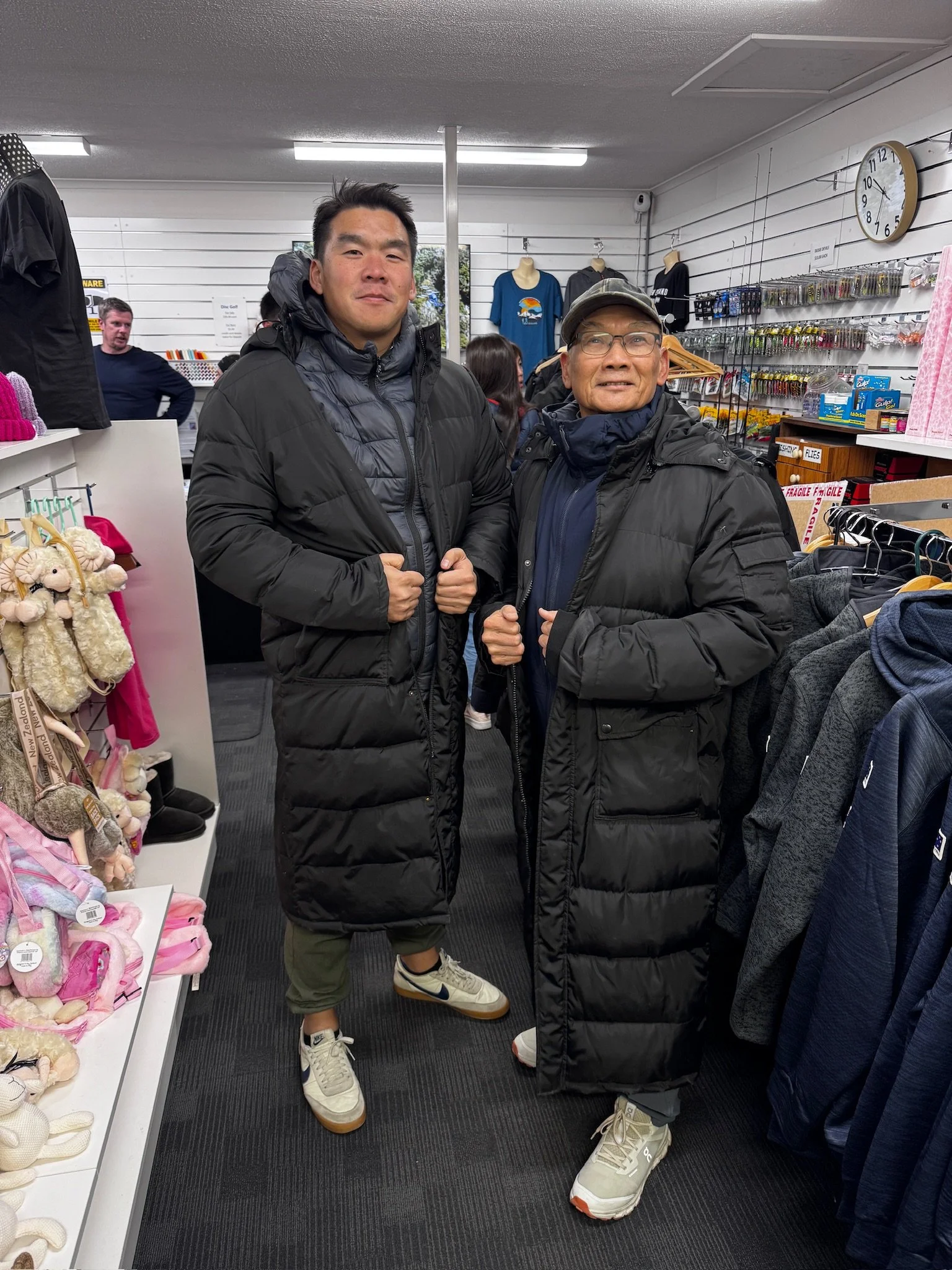
This September, I committed to an intentional joy practice. The purpose was to notice all the things that gave me deep joy and steer into them, oftentimes hardwiring them into my day. Many of the usual suspects popped up: walking amongst the towering Monterey cypress in Golden Gate Park, discovering new obscure music I could lord over my friends, pitching balls to my friend’s four-year-old. With my dad visiting me in the Bay Area for his birthday, I expected that day’s structured joy to be simply “getting dinner with dad.”
At the same time, I challenged myself to speak entirely in Cantonese during the meal. I wanted to notice how it felt to strive that night, even in the face of difficulty. Would I be a car stuck in first gear as we shared our garlicky dou miao?
We meet at Jin Gege, an “if you know, you know” Cantonese phenomenon in San Bruno and a shining validation of Freddy Wong’s Yelp 3.5 star rule.
The whole dinner, I feel like the woman with equations meme, my mind working in overdrive to flex my mastery of the restaurant unit from the Cantonese 101 textbook. However, unlike our meals back in Denver, there are no familiar faces at adjacent tables, ready to commandeer the conversation. There is no sik tang, mmm sik gong tonight. There’s only nou lik (giving my best effort, striving, just trying to fricking survive).
My dad uses the iPad to order his usual set of demure and understated Cantonese favorites. I take the reins and order a plate of fried salt and pepper spare ribs, at which point I make a joke about yeet hay, the mythical ailment that Chinese mothers have been fighting for millennia, often associated with fried and heavy foods.
My dad lets out a deep, genuine laugh and slaps me on the knee, right on the mauve scar.
It still stings. I smile to myself and soak in the feeling of hard earned joy.
About Howard Hsu
Pop culture sponge. Ultimate Frisbee Unc. Mango connoisseur. Howard feels most alive when activity intersects with community. His superpower is making people feel seen, and he believes that community is built through small, everyday moments interspersed with bursts of collective joy. His podcast, the Unlistenables, explores the various ways that the Emo music from his adolescence reverberates within and connects us all to this day.
Howard’s parents moved from Hong Kong to Denver in the early 1980s and became restaurateurs, winning “Best Americanized Chinese Restaurant” in Westword magazine more than a dozen years in a row. For much of his life, Howard accepted the simple “Americanized Chinese” as a description of himself, too.
Over the past few years, and with the help of the Interwoven community, he has been developing a blend of his Cantonese and American identities that is uniquely his own.