
From the center to the edge
When I was 5 years old, I lived in the center of the universe. Waking up late to the sweet smell of adas polo or havij polo while my grandmother was putting the finishing touches on lunch for me and my cousins, I could never imagine living any differently. We would sprint to lunch and settle in for the feast that my grandmother had labored for hours to prepare, complete with pickled vegetables, yogurt, doogh, and Pepsi. There was no other way to live: as an Iranian living in Iran, every single element of our culture, from the gold coins and crisp bills the grandchildren would receive on Nowruz, to the fragrant jasmine flowers I would discover in my grandmother’s ornate prayer pouch was the reality of my world.
When we moved to Canada at the age of 6, my world fractured into two realities. One at home, that echoed my childhood in Iran, upheld by my parents who bore the culture of that world everyday with food, language, and traditions. And another at school where I internalized the values and language of my new world. This split in my identity further widened when I moved away for college and established my sense of self away from my Persian family.
Between school terms, going home to Toronto would reawaken my fading Persian identity. I was delighting over the ghormeh sabzi my mom had enthusiastically prepared anticipating my arrival. The contrast of the cool yogurt on the hot herby meal combined with the refreshing fizz of Pepsi took me back to those summer days with my grandmother’s cooking. I’d become a chameleon, in one moment speaking Farsi and settling into the mold my family saw me through, and in another code switching with my friends and my then girlfriend as we’d run across my university campus, play board games and drink boba, or dance the night away. In this reality, I was untethered from the defaults and expectations of the culture I had once seen as the center of the universe. My independence and desire to self determine across my two worlds created tension, both visible and invisible.
10 years ago, I set foot in San Francisco for the first time. The rolling fog, colorful Victorians, and the Pacific breeze welcomed my thirst for adventure. It was here that the nomadic nature of my identity would reveal itself to me: dynamic and in constant motion, much like the waves landing relentlessly on the Pacific coast. I had gone even farther from home — 2,300 miles from Toronto and 12,500 miles from Iran, moving further west each time, now living on the edge of the world.
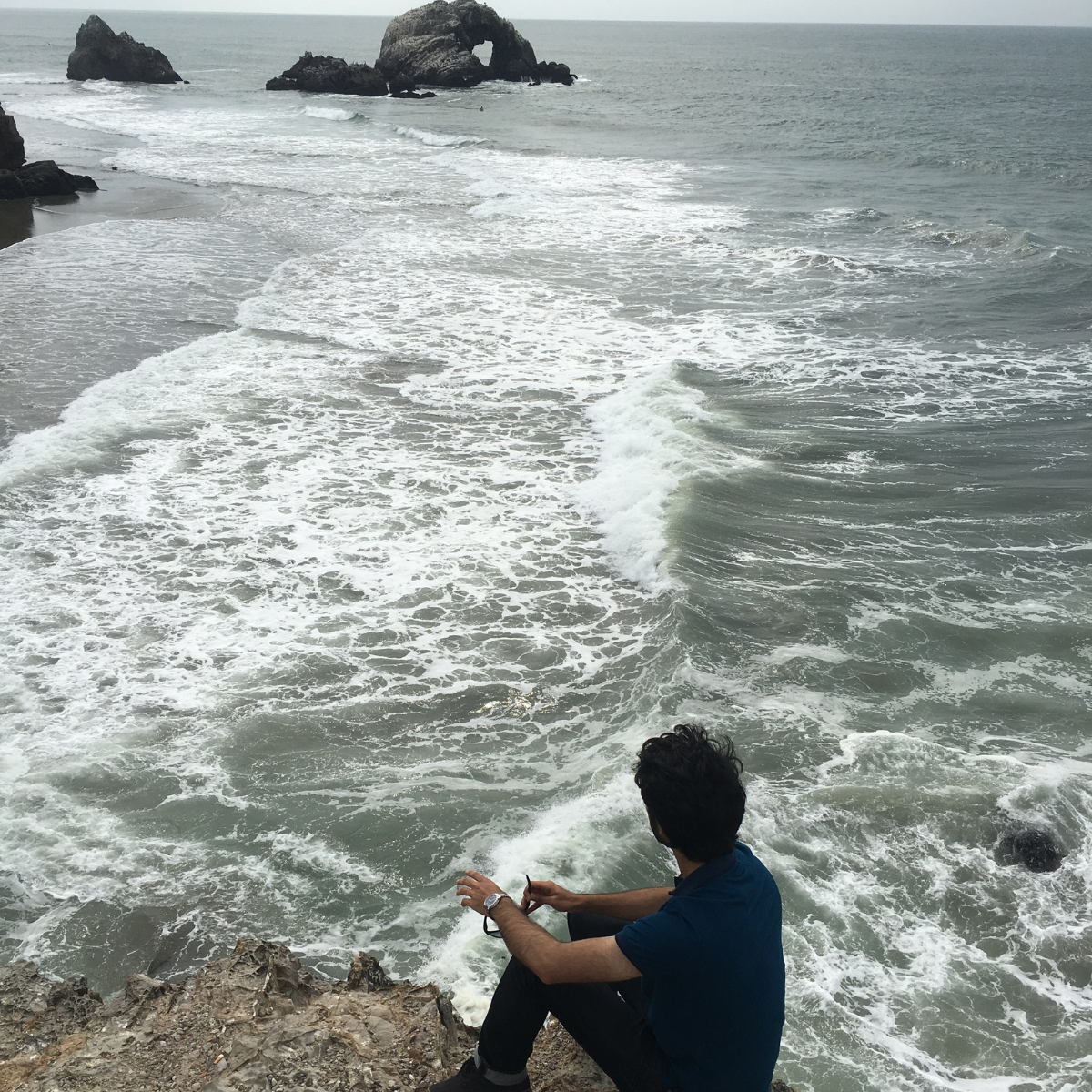
My pursuit of individuality and self determination had given me what I wanted — with no cultural anchor in sight, I was free to explore and define myself, with the distance from my culture ever increasing. But some nights, I would find myself held by my wife, with tears streaming down my face, illuminated by the moonlight shining through our windows. Confused in the dark, I could not understand why I was flooded with such intense nostalgia and loss as memories returned: echoes of my cousins’ laughter, the feel of my grandmother’s embrace, a world from 25 years ago in which we had belonged so completely.
I realized then that assimilation could never grant the kind of belonging I craved, because it could not erase the experiences that shaped me. Who were my people and where did I belong? I was floating in a liminal space, my existence a bridge between many worlds. The expectation that I could mold myself to fit exactly one culture was misplaced; I was forever changed, my identity interwoven with the cultures I’d inhabited — a far cry from the 5 year old living in the center of the universe.

I visited my parents last month in Toronto, welcomed again to a colorful feast in their backyard, surrounded by my mother’s blooming orange marigolds and red daylilies. There was something almost unchanged about it all: the abundance of food, the smell of hose water, and the insistence that I eat more as we gathered around a table. I loved the food, I really did, but my relationship with it had changed. I declined more sweets; I poured water instead of Pepsi; and after a few days, I craved my wife’s spice-heavy home cooked Asian meals.
Once again, home had changed, and it was time to return back to it.