
Written by Carrie Ann Stotts
My friend and I held each other in a tight embrace in the darkness, tears streaming down our faces. I’d turned 16 a few days earlier, and the following day would leave Nairobi, which had been my home for as long as I could remember, for America. My friend would stay until graduation and we had no idea when we would see each other again - if we ever would. We reluctantly parted and said our goodbyes. We turned and began the opposite walk away towards our respective destinations. Suddenly, we startled at the sensation of rustling up above us. An Eagle-Owl perched in a tree had taken flight. It flapped its wings over my head and then glided out of sight into the moonlit sky.
I felt sure it was an omen–but of what, I couldn’t tell.
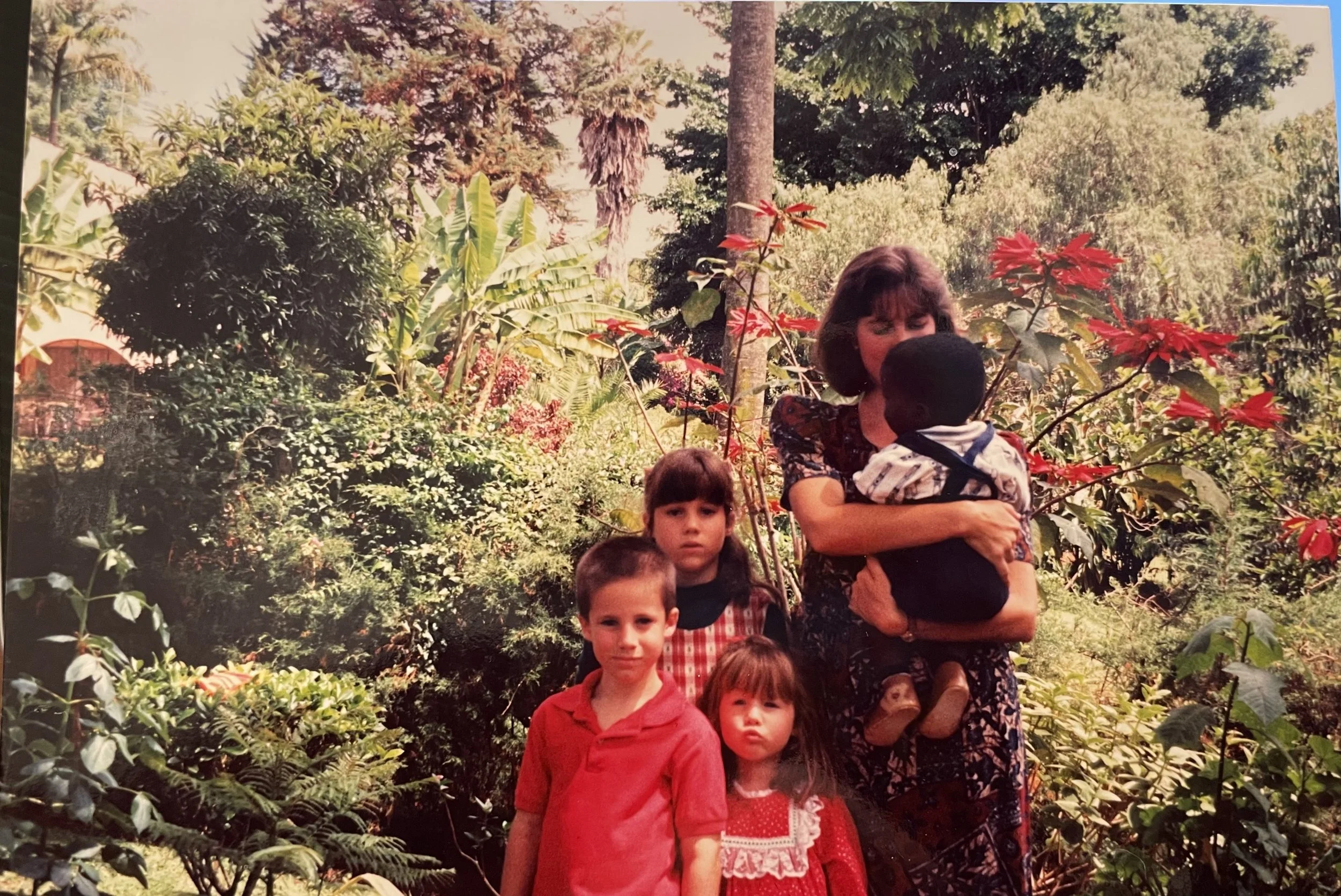
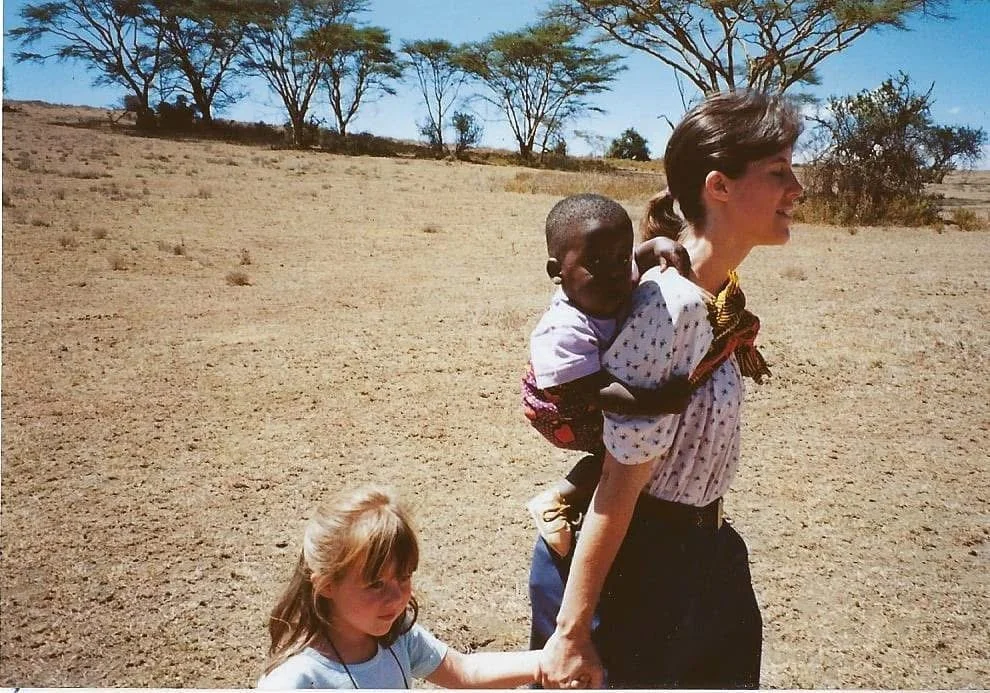
I grew up as the child of a white American couple in Nairobi, Kenya. My father was a missionary ophthalmologist and my mother, a homemaker. I grew up in a family of 5 siblings in the “middle of the middle” - my 2 biological siblings before me and my 2 adopted Kenyan siblings younger. My life in Kenya was roughly 90% of what I knew–the remaining 10% belonged to occasional summers spent with my extended family in the American Pacific Northwest. The Portland, Oregon that was home for my parents felt entirely foreign to me.
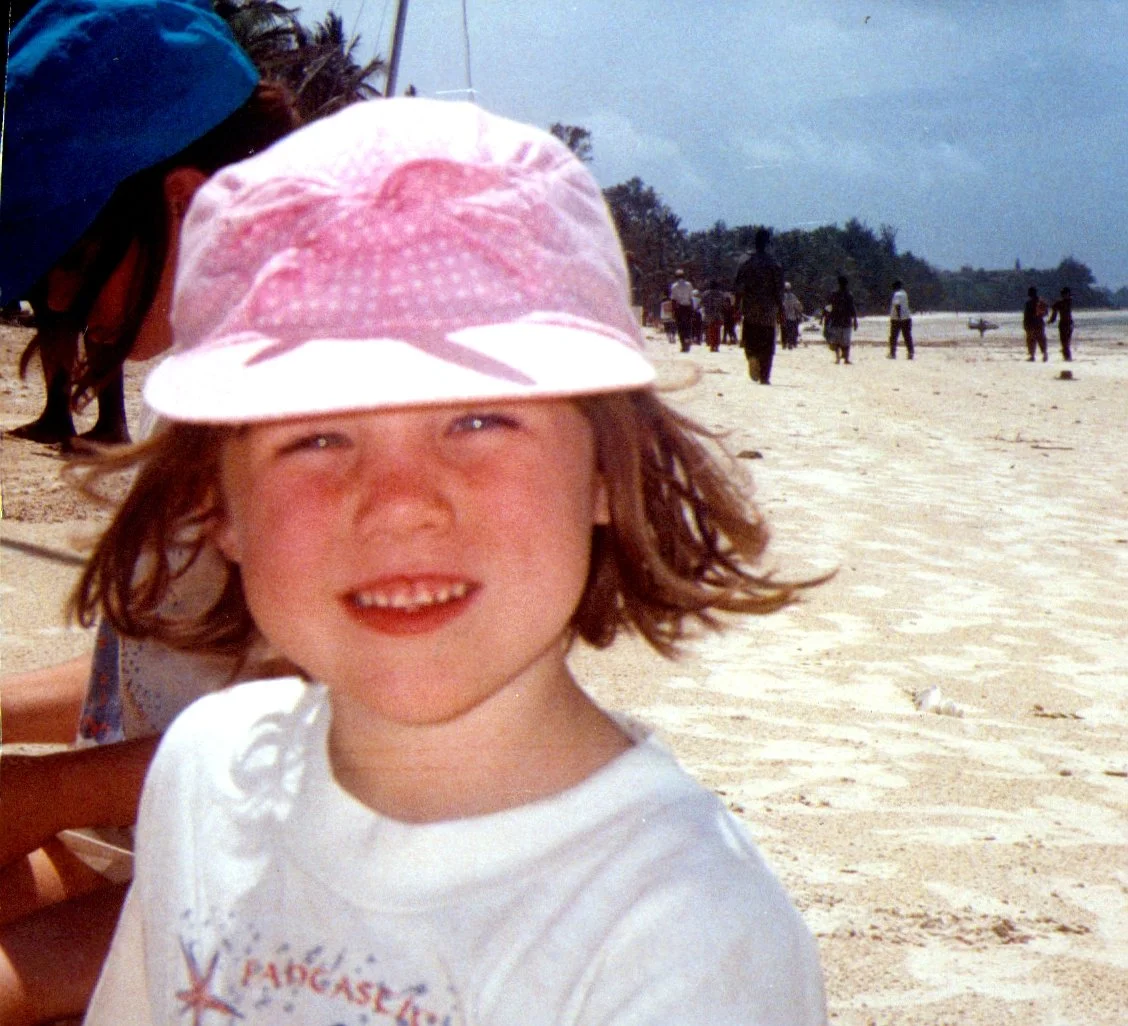
Kenya was everything to me–warmth, smiles, food, sunshine, hospitality, beauty, and comfort. As my 16th birthday approached, and my parents announced we would leave Kenya and I’d finish my final 2 years of high school in America, I was devastated.
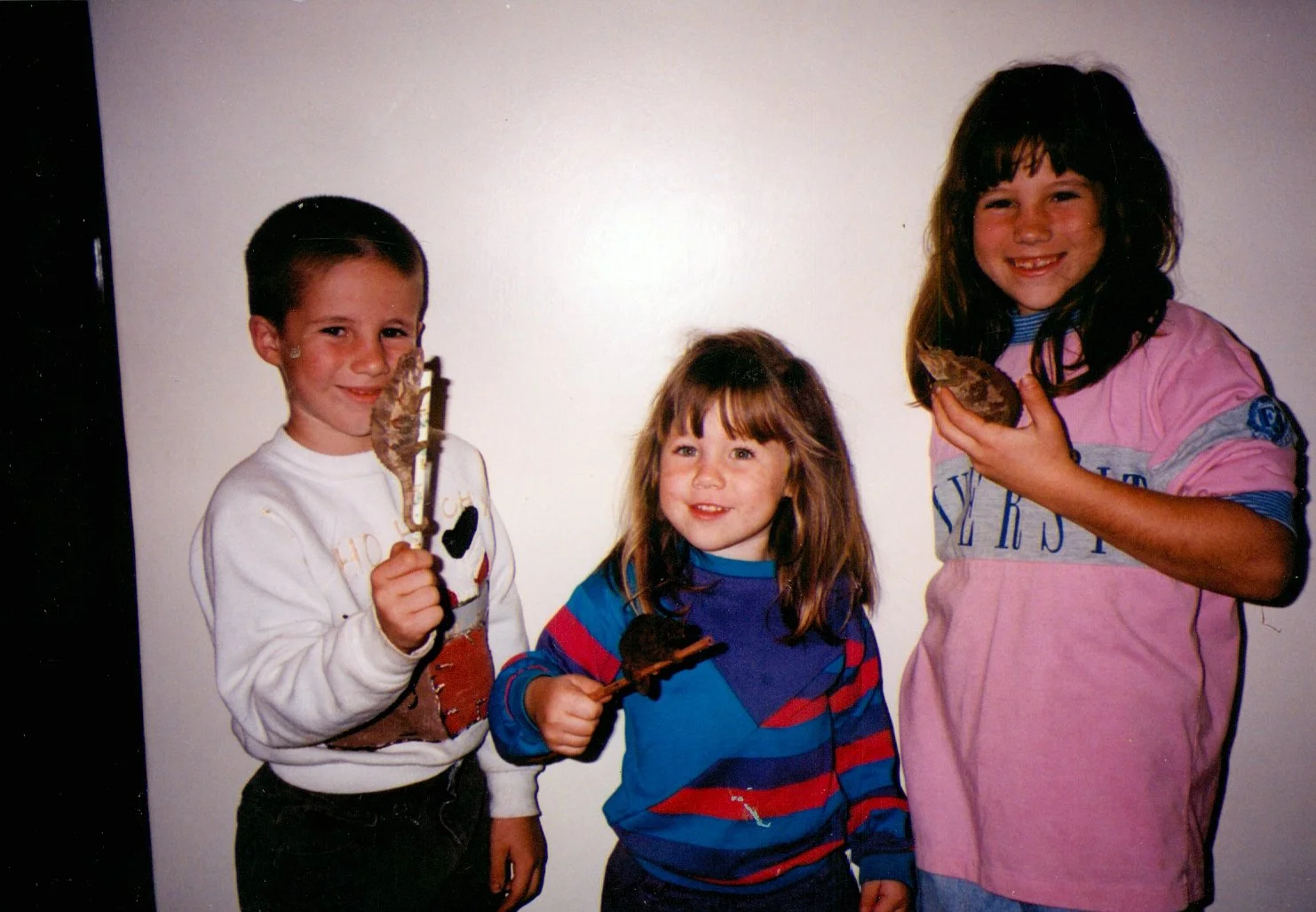
When we moved to a tiny town in rural Washington State, yes, the culture shock was hard. But what was worse, was the bureaucracy. Though my younger sister’s adoption was complete, she was not yet a US citizen, and so my mother stayed behind in Kenya with her while my dad, my brothers, and myself moved on to the US. What was initially estimated to take 1 month to obtain her visa took several, and while my mother and younger sister waited for entry into the United States, my brother and I started at our new American public schools, joined the soccer team, dealt with odd questions about our upbringing, and tried our best to mother ourselves throughout it. Our dad was emotionally absent throughout the transition whilst dealing with his own mental health and grief. For the first time in my life separated from the closest relationships in my family - the ones between me and my mom, and me and my younger sister, I felt I was alone to navigate this new world and had to grow up quickly. When my mom and sister finally arrived after months of family separation, my brother and I, out of necessity, had become children my mother didn’t recognize; self-reliant, nonchalant, and constrained.
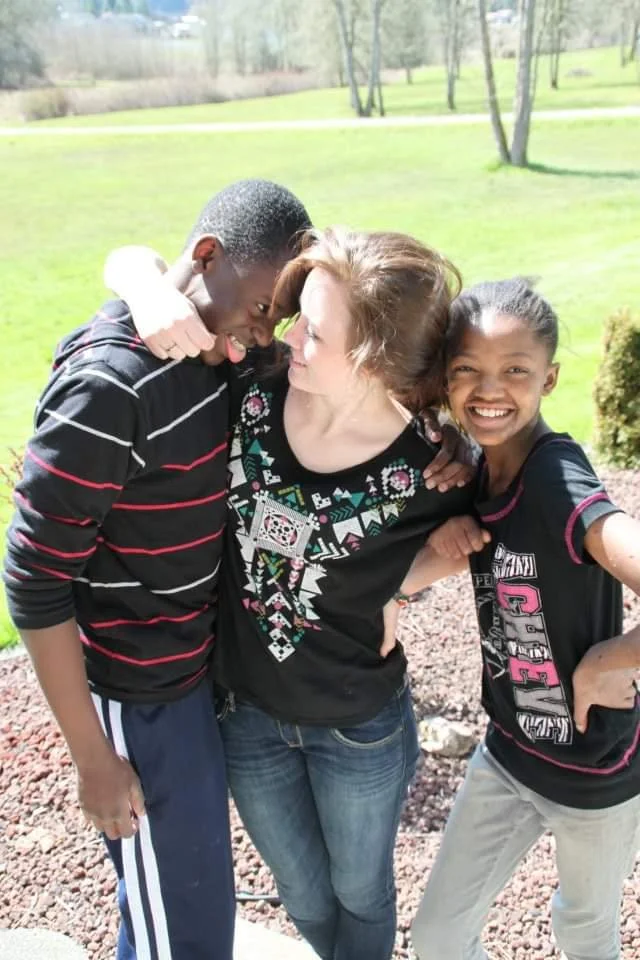
Carrie and their siblings Alex and Grace in Washington State
Eventually, I’d move to the Portland, Oregon area for college and years later, come to love it. I loved spotting places my ancestors had frequented growing up, which seemed so far away when I was young. I learned to surrender to the coziness of incessantly rainy, dark winters, which I’d initially hated after a childhood of equatorial sun. I let go of the accent I’d had when I’d moved to America - a mix of British, Kenyan, and American English - and, for better or worse, formed my mouth around sounds that those around me could more easily understand. I put down roots and wondered whether I could have kids and grow old there, like my ancestors did.
After 10 years, however, I felt a bit stagnant. I’d found an incredible community in Portland. Friends who’d supported me when I’d come out of the closet and shown me what queer community felt like became my chosen family. A part of my identity hidden deep under layers of repression until my early 20’s, shamed and dismissed in the Southern Baptist culture I grew up in and outright outlawed in Kenya, became a source of connection and pride for me. Though one aspect of my identity finally felt validated, the Third Culture Kid (TCK) in me felt isolated in a homogenous, overwhelmingly white American city where few people knew or asked about my childhood. It was assumed, by my appearance, that my upbringing had been the same as theirs. The side of me that felt fundamentally different from everyone I interacted with on a daily basis - my TCK identity - largely stayed quiet in my psyche while I adapted in order to more easily communicate with the dominant culture around me.
…Then I got laid off and was offered a job in the San Francisco Bay Area. For the first time since I’d moved to America, I had to make a major move all on my own. The move was quick and chaotic, but I never felt completely unmoored. In the days and weeks after moving, I continuously found myself thinking back to that move to America 15 years earlier.
In my early 20s, I’d gone through a lot of turmoil - a marriage, a divorce, and multiple deaths. I’d been introduced to EMDR therapy in my later 20s and with it, the concept of parenting your inner child. As I fostered a peaceful and protective relationship with myself, my body showed me ways it was holding on to memories from my childhood–traumas I’d thought I’d left behind, but lingered, clinging tight to my bone marrow. It wasn’t until I moved at the age of 31 that I realized the extent that my move at 16 still impacted me, how it had left me alone to face a new and scary world when I needed care and protection the most.
It was then that the reliable, compassionate adult in me was able to show up for the angry (and truthfully, emo) teenager in me. I did this through a lot of self talk and bargaining - (“you can go have fun at the beach after you unpack your kitchen”) - and care (“let’s make colorful fiber art creations together to decorate and make your new apartment a sanctuary”).
Simple acts of kindness towards and prioritizing the kid in me who at times felt scared and unsteady, and worried that this move would be like the last one, was remarkably healing. It shifted my trepidations and grief about moving towards excitement to explore the remarkable, iconic place I’d moved to. I loved the melting pot found particularly in the East Bay area - being surrounded by languages I didn’t understand and delicious cuisines unfamiliar to me felt like home. Similarly, I often found myself thinking how the mild, “Goldilocks”, not-too-hot and not-too-cold weather of the Bay Area reminded me of Nairobi. Citrus trees, succulents, and all manner of tropical plants flourished here. Beloved Jacaranda trees and Birds of Paradise, which I’d not seen in bloom since I’d lived in Kenya, sprouted deep purple blossoms and funky spears down the streets of my warmer Californian home.
At night in my new apartment, I’d often hear Great Horned Owls calling to one another outside my window and, rather than feel a sense of foreboding, I’d wonder at the mysteries of the universe and feel gratitude for my place within it.
While I grew acclimated to my new surroundings, I was going through a new sort of family separation - my partner, Be, remained in Oregon. When I got offered the job and had to quickly move, it forced us to make decisions about our future together after a couple of years of dating. Would Be leave Portland and join me in California? Would they stay, and we’d shift to a long distance relationship for the foreseeable future? Would we break up? We mulled over these options together and came to the conclusion that we neither wanted to break up, nor wanted to do long distance for an undetermined amount of time. Be was open to moving and joining me, but hadn’t set foot in the Bay Area before, and sensibly wanted to visit and scope things out before making the decision. A month after I moved, they visited for my birthday and quickly fell in love with the city, the sunshine, and the proximity to the ocean. We made the decision that they would not only move and join me in the Bay, but we would intertwine our lives closer and live together.
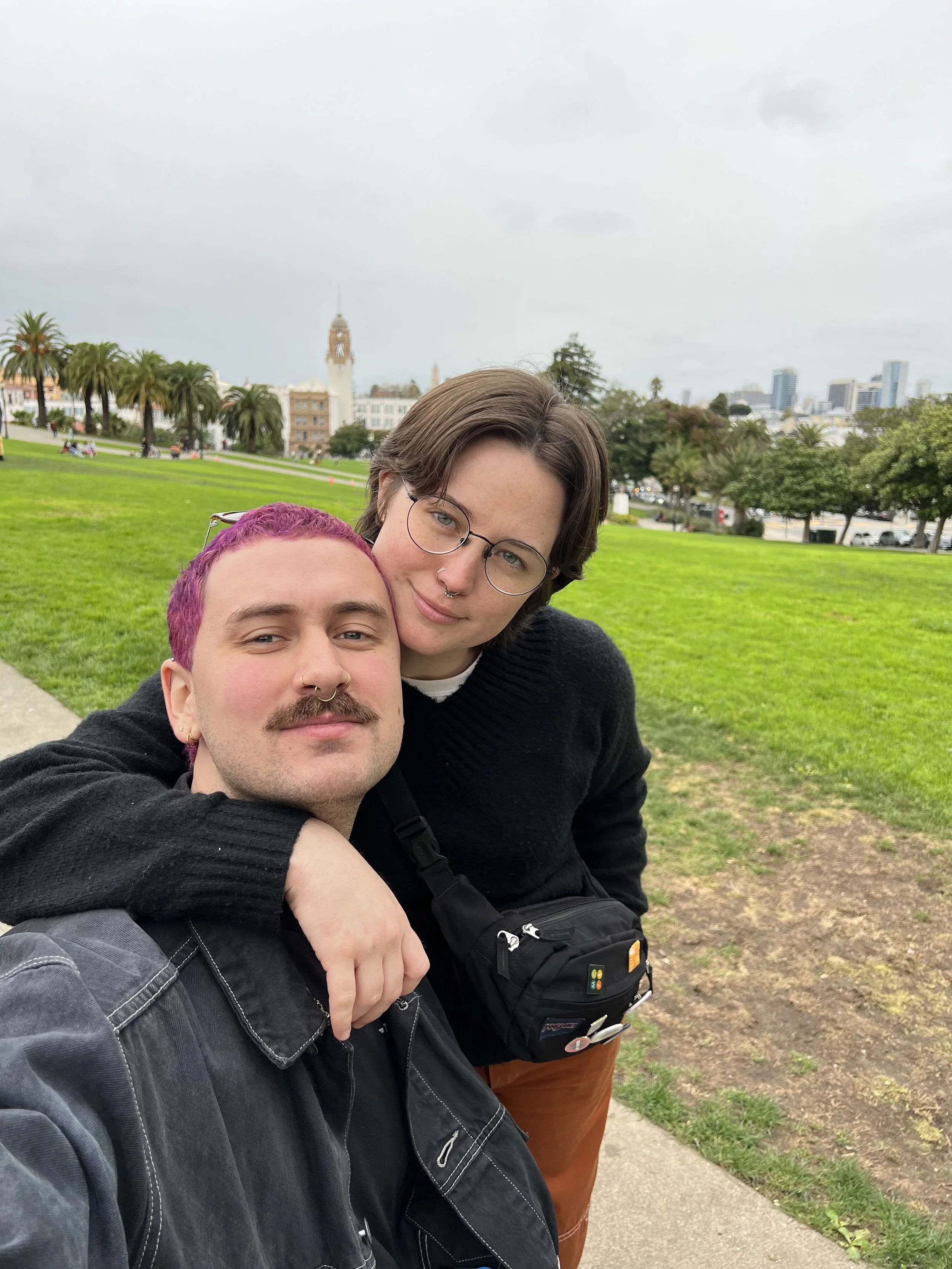
Carrie and their partner, Be, in San Francisco
While we made the best of the distance that temporarily separated us, doubts and fear would occasionally creep into my mind. I hadn’t lived with a partner since getting divorced at age 23. Be and I had remarkably different childhoods, and their upbringing in suburban New Jersey to divorced parents was literally a world away from mine. What if I’m investing myself in a relationship with someone who might not “get” me the way other TCKs do? What if moving in together is the wrong decision, and we’re not a good match? Whenever Be or I would visit one another, however, my fears would quickly dissolve. I felt safer and more seen with Be than in any romantic relationship I’d ever been in. Be and I are both queer and nonbinary, and they arguably saw and understood the fluidity and fluctuations in my gender identity better than any TCK I’d been close with before.
After several months, Be was offered a job and we moved them and their tripod dog, Pirata, down to the Bay Area over the winter holidays. We quickly settled into our sun-drenched home in East Oakland, and rooted into our little family. Be may not experientially understand what it’s like to grow up overseas, but they have infinite curiosity to learn about my experience and how it’s shaped me. Their care is what matters the most to me.
Recently Be and I took a trip to the East Coast for the first time together. They drove me around New Jersey and showed me all of their old stomping grounds - houses they grew up in, and schools they went to. To me, it felt like visiting a foreign land, or perhaps the movie set of a quintessential middle class, white American childhood - quaint main streets in small towns where they’d ride their bike, and backyards where they’d play hide and seek into the dark hours of the evening with kids in their neighborhood. I met their aunts and loved the way they said “Carrie” in their New Jerseyan accents. I sampled New York-style pizza with sweet tomato sauce and tried my first (authentic) Philly cheesesteak.
It helped me better understand Be and their cultural upbringing. I can only hope that I get to return the favor someday. For now, I’m content to deepen our connection together in our new home next to the calm, glittering waters of the Bay.
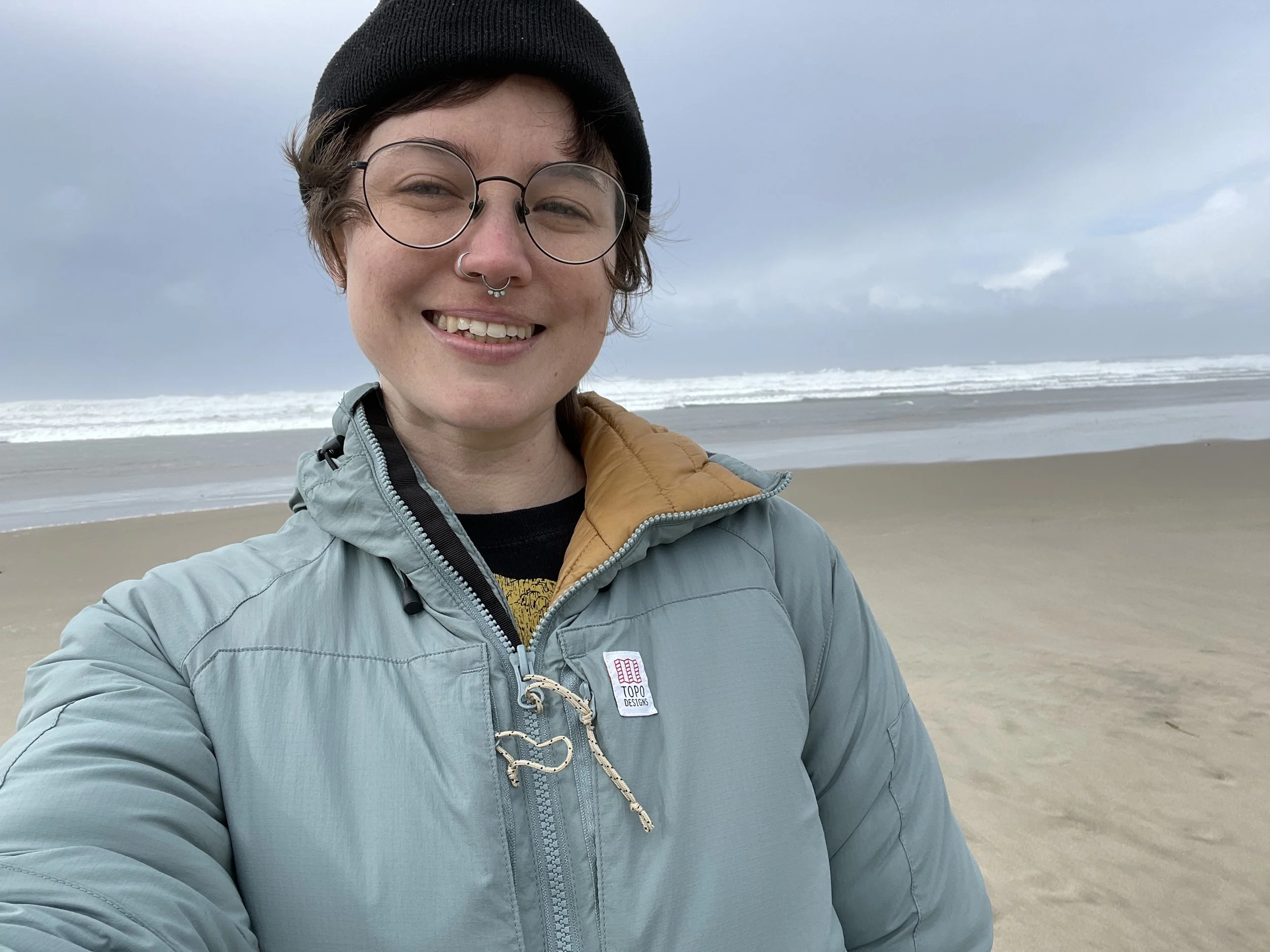
About Carrie
Carrie Ann Stotts (they/them) is a poet, former social worker, and current children’s librarian living and breathing the San Francisco Bay Area. They love all things sourdough, fiber arts, and outdoors. Their greatest pleasure in life is to dive into the local history of wherever their toes scrunch the soil. They self-published a collection of poems entitled: “Flowers for Alex” about their adopted younger brother. They also have multiple works featured on the “Poet Heroic” podcast. They live in Oakland, California with their partner and their senior, tripod, couch potato pit bull.